

More and more women face irritations, itching, redness and reactions caused by skin contact with materials that do not please her.
Underwear is especially important because it is in contact with the most sensitive parts of the body throughout the day. Choosing a material that retains moisture, creates friction, or contains harsh chemicals increases the likelihood that the skin will react.
That is why the search for material that reduces the risk of irritation has become a priority for many women.
In this context, bamboo has become one of the most sought-after materials for women’s underwear.
It is known for a number of natural features that make it suitable for sensitive skin, making it one of the most popular hypoallergenic options.
Below is a detailed guide on why bamboo laundry is the right choice for allergy-prone women who want to keep their skin calmer, more stable and free of unpleasant reactions.
Contents
Bamboo as a natural hypoallergenic material
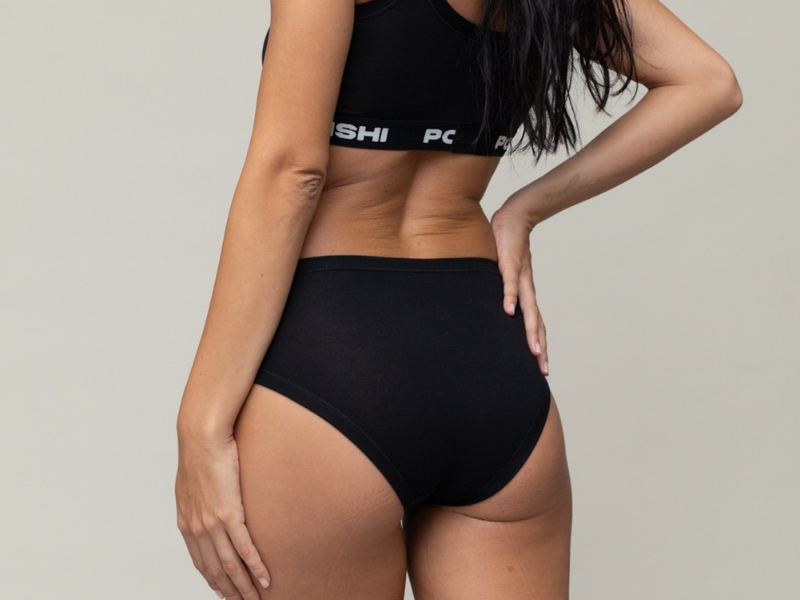
Bamboo fibers have a fine, even surface without rough parts that can scratch the skin. This reduces the possibility of redness and rashes during all-day wear.
Women with extremely sensitive skin often notice a difference after just a few days.
For people who have atopic dermatitis, contact allergies or frequent episodes of inflamed skin, bamboo can be much more pleasant than other materials.
On smanjuje trenje, ne grebe i omogućava da se koža manje nadražuje tokom kretanja, što je ključno kod atopijskih stanja.
Prirodna otpornost bambusa na mikroorganizme
Moisture and heat encourage the growth of microorganisms that can increase irritation.
Bamboo naturally reduces the accumulation of microorganisms in the fibers, which is especially useful in the intimate area where the skin reacts to the slightest change.
Thanks to these properties, bamboo stays fresh longer than many other materials. Less retention of microorganisms means less likelihood of unpleasant odors, and therefore less risk of skin reactions.
Bamboo is known for its extremely fast growth – some species can grow over one meter in 24 hours under ideal conditions.
It is therefore considered a highly renewable and sustainable source of fiber for textiles. Unlike trees, which take decades to grow, bamboo can be harvested every few years, making it a more environmentally friendly material.
Moisture removal and heat reduction

Bamboo wicks away moisture, reduces friction and keeps the skin stable.
One of the main causes of allergies is excess moisture on the skin. If the laundry retains moisture, the skin becomes softer, more sensitive and prone to reactions.
Bamboo fibers wick moisture away from the skin and help it stay more stable throughout the day.
For women who walk a lot, train, sit for long periods or do dynamic jobs, bamboo makes a clear difference.
It reduces friction and helps the skin stay drier even when the body is exposed to greater exertion or heat.
An additional advantage is that the material reacts quickly to temperature changes and thus reduces the feeling of heating that often causes discomfort in the intimate area, especially during the summer months or increased physical activity.
Bamboo as an alternative for women who react to synthetic materials
Many women have constant but mild reactions to synthetic materials, such as burning, itching, unpleasant odor and small red dots.
When switching to bamboo, these reactions are often significantly reduced or disappear completely because the fibers are less irritating to the skin and do not create intense friction.
If the model contains a high percentage of bamboo, and a small percentage of elastin serves only to make the cut follow the body line, the material will still provide most of its positive properties.
It is important that bamboo has the highest percentage in the composition, because only then does the skin get the protection it needs for people with sensitivity to synthetics.
How to recognize real bamboo underwear?
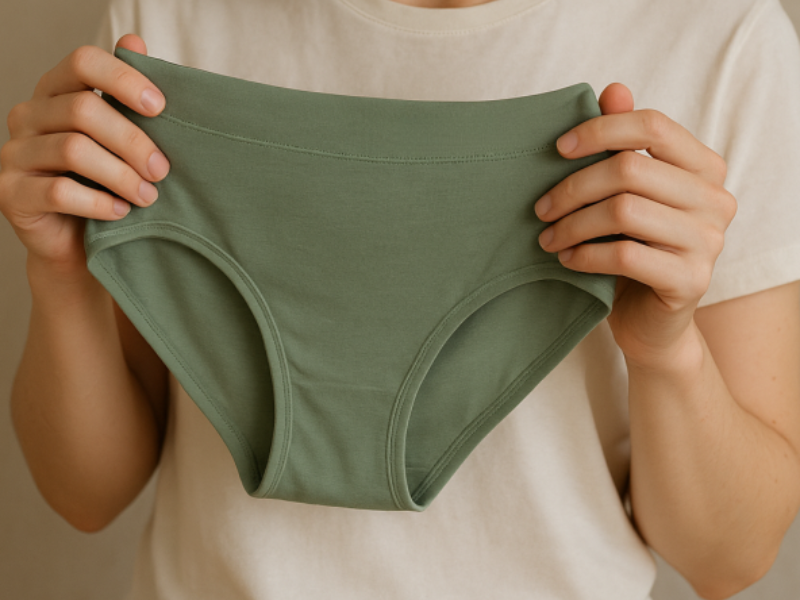
You can often see products on the market that are presented as bamboo laundry, although in actual composition they contain a barely noticeable amount of bamboo fibers.
The word bamboo itself easily attracts attention because it is associated with naturalness and gentler contact with the skin, which is why many brands use such a description even when the fabric does not have the properties expected of the authentic material.
That’s why it’s important to know what real bamboo looks like and how it differs from models that only use a marketing name.
The most reliable way to recognize the quality is to look at the declaration.
The fabric that really provides the benefits has a high percentage of bamboo, usually around seventy percent or more.
When bamboo is listed first in the composition, it means that it forms the basis of the material and that its properties come to the fore.
If it appears only at the end of the list, it is a sign that it is minimal and that a gentler contact with the skin or a more stable reaction in sensitive women cannot be expected.
Real bamboo has a distinctive look and texture. Its surface is slightly matte and cool under the hand, not plastic nor too shiny.
Models that contain a lot of synthetics almost always have a pronounced sheen and springy feel that reveals that bamboo is only present in traces.
When the fabric is stretched between the fingers, the bamboo provides a smooth glide without feeling scratchy, and the surface remains even when slightly tightened.
Synthetics can be stretched to the point where they become rough or rubbery, which is a clear sign that it dominates the composition.
An important detail is the behavior of the fabric after washing.
Real bamboo remains soft and smooth, while materials with a minimal presence of bamboo often stiffen, lose softness, or become electrified.
It is good to pay attention to the maintenance recommendations. Authentic bamboo is usually washed at lower temperatures and without aggressive detergents, as it does not require difficult procedures to maintain its quality.
If the label allows a too rough wash, it often means that the synthetic part is dominant.
The difference between different types of bamboo fiber
There are two basic types of fibers on the market: mechanically processed fibers and viscose obtained from bamboo.
Mechanically processed fibers retain more natural structure and require less chemical treatment, while bamboo viscose undergoes a processing process, but still retains the main benefits such as reduced friction and good skin response.
The quality largely depends on the processing method, the purity of the fiber and the transparency of the brand.
That is why it is recommended to choose manufacturers that clearly state the origin, the processing process and the actual fiber percentage.
| Type of fiber | Method of obtaining | Advantages | What to pay attention to |
|---|---|---|---|
| Mechanically processed bamboo | Physical and minimal chemical processing | More natural structure, lower risk of irritation, greater durability | Rarer on the market, higher price |
| Viscose from bamboo | Chemical process of degradation and processing | Smooth surface, good skin reaction, more affordable price | Quality depends on the process and purity of the fiber |
For women who want less irritation
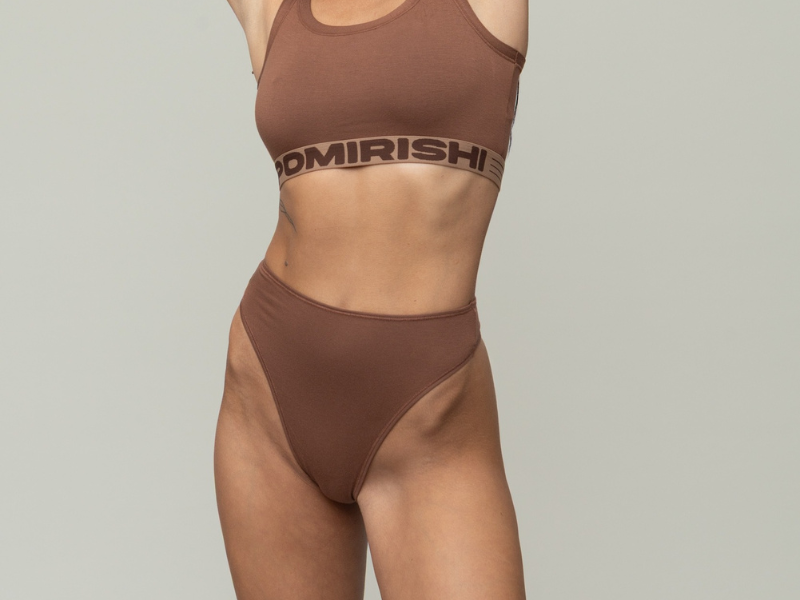
Synthetic materials are often treated with various chemicals during the manufacturing, dyeing and finishing processes.
These substances can remain in the fabric even after washing, which is a problem for women who have sensitive skin or react violently to traces of chemical agents.
Heat-retaining materials are particularly troublesome, as chemicals are activated more quickly on the warm surface of the skin and can cause redness, small bumps or stinging.
With bamboo, the situation is different because it does not need an aggressive process to give the fiber the desired structure.
Therefore, the resulting traces of chemicals are significantly smaller, which gives women with sensitive reactions a more stable feeling throughout the day.
Even when bamboo is incorporated into the fabric along with a small percentage of elastin, the mostly natural part still reduces the risk of irritation compared to full synthetics.
Another great advantage is that bamboo retains its smooth structure despite frequent washing. Many synthetic fabrics become rougher over time, especially when washed at higher temperatures or when stronger detergents are used.
Such a change in structure increases friction, so the skin is under constant pressure, which is not suitable for women who already have sensitive body parts.
On the other hand, even after months of use, bamboo remains pleasant to the touch, does not harden and does not lose its surface fineness.
This means that contact with the skin remains gentle, which is particularly important for areas that are constantly under pressure such as the groin, inner thighs or waistline.
By combining good care, washing at moderate temperatures and avoiding harsh detergents, bamboo can last much longer than the average synthetic laundry, without losing its softness or shape.
This not only saves the leather, but also the wallet, because the quality is maintained over a longer period.
Frequently asked questions and answers about bamboo hypoallergenic underwear
Is bamboo suitable for women with frequent allergies?
It is. Bamboo has a fine texture that reduces friction and wicks moisture away from the surface of the skin, helping to keep the skin more stable.
Can bamboo cause allergies?
Does bamboo stay comfortable after many washes?
How to recognize that bamboo is of good quality?
Is bamboo good for colder days too?
Is it suitable for women who train?
And finally
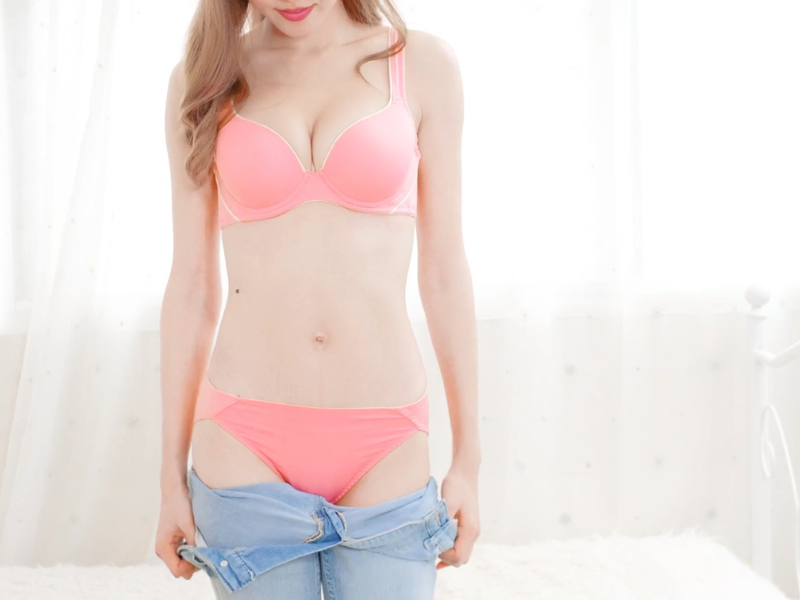
Bamboo underwear is increasingly popular because it brings relief to women who struggle with sensitive skin, allergies and reactions to synthetic materials.
Its fine fibers, ability to wick away moisture, natural resistance to microorganisms and less need for chemical treatments make it extremely suitable for everyday use.
If the composition is chosen carefully, the declarations are checked and attention is paid to the cut, bamboo can become a long-term solution for women who want calmer, more stable and less reactive skin in the intimate area.