
Have you ever wondered why your skin is irritated after wearing your favorite t-shirt? Or why freshly washed clothes, although apparently clean, quickly take on an unpleasant smell as soon as you put them on?
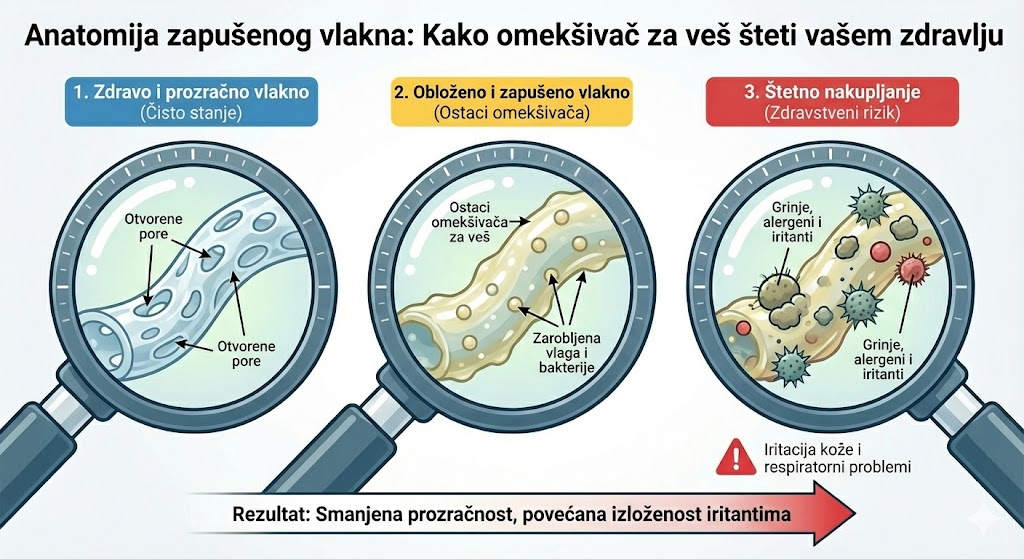
The problem is most often hidden in the phenomenon called “laundry that does not breathe”. This happens when the fibers of your clothing lose their ability to effectively absorb and release moisture and sweat.
Instead, the fibers become congested, creating an ideal environment for trapping: sweat, body oils, bacteria and chemical residues from detergents and, especially, fabric softeners.
The direct link between non-breathable laundry and your health is clear: what is bad for the fibers of your clothes is also bad for your skin and respiratory tract.
In this text, you will learn how to recognize the problem, what are the main causes and how to solve the problem of “congested” laundry, while protecting your health.
Contents
Recognize the signs that your laundry isn't "breathing"
| Symptom on Laundry | Symptom on Skin/Health | Main Cause |
|---|---|---|
| Unpleasant smell immediately after washing | Rashes, itching, skin irritation from clothes | Retained bacteria and detergent/softener residues |
| Clothes feel stiff or sticky | Worsening of eczema or dermatitis | Excessive use of fabric softener and detergent |
| Towels have poor water absorption | Fungal infections, acne on the body (back) | Waxy layer of fabric softener around the fibers |
| Sports clothes "stink" quickly | Redness, contact dermatitis | Synthetic materials that trap sweat and oils |
The main problem: health consequences
When laundry does not breathe, it becomes a generator of problems, and your skin, as the largest organ, suffers direct consequences.
Lost elasticity
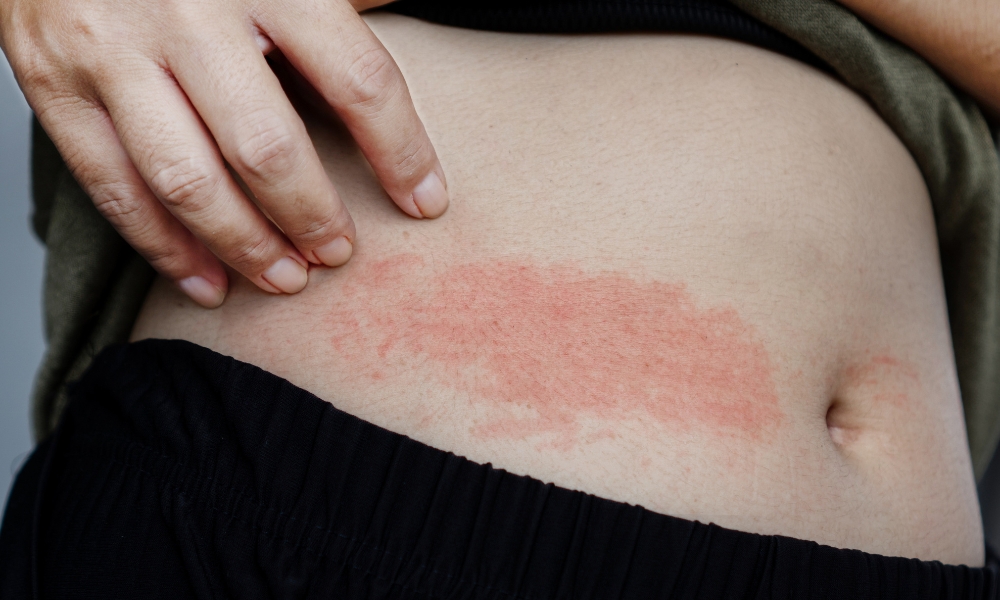
The chemical residues trapped in the congested fibers, combined with heat and moisture, are a ticking time bomb.
The most common consequence is contact dermatitis, which manifests itself as a rash, redness or itching.
Skin irritation from clothing is most often caused by aggressive synthetic fragrances and preservatives that remain in the laundry and come into direct contact with the skin.
If you have sensitive skin, or suffer from eczema, this problem is drastically worsened.
Development of fungi and bacteria

Fungi and bacteria grow fastest in a warm and humid environment, especially on dirty or poorly dried fabrics
Sweat and moisture trapped in the fibers are the perfect habitat for fungi and bacteria. Non-breathable laundry creates a dark, damp and warm environment – ideal for pathogens to breed.
The consequences are multiple:
- Fungal infections: Underwear and socks made of non-breathable materials can lead to fungal infections of the groin or athlete’s foot.
- Body acne: Synthetic sports clothing that traps sweat is often the main cause of back and chest acne (so-called body acne).
Chronic unpleasant odor
Another sign that the laundry “doesn’t breathe” is a persistent, chronic smell. Even after washing, clothes can quickly take on an unpleasant, musty smell.
Why does laundry smell after washing? Because odor-causing bacteria and grease remain trapped inside the fibers, and the fabric softener, instead of helping, creates a coating that further “seals” them from the inside.
Why does laundry "lose its breath"? Three key reasons
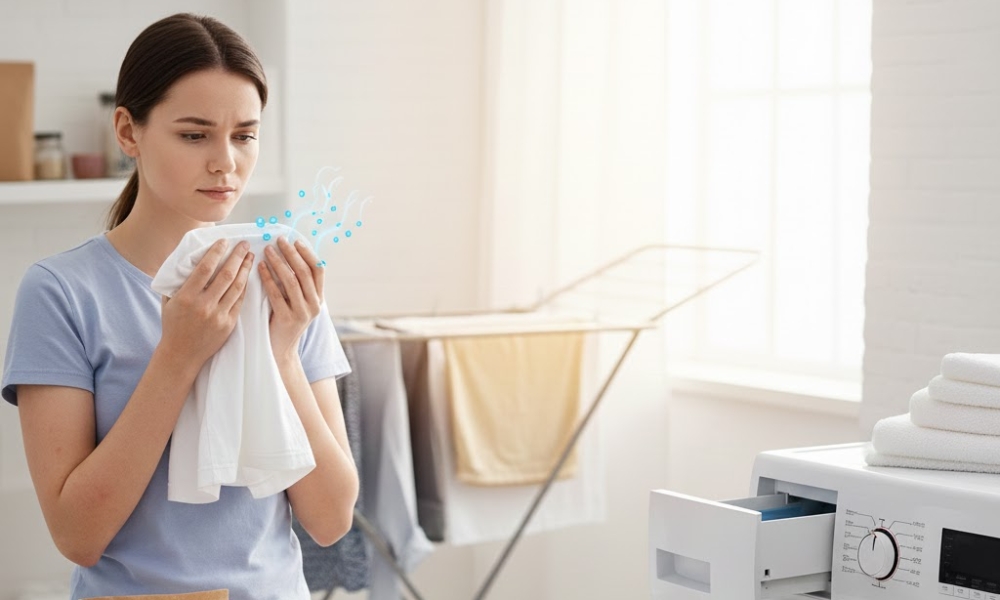
Laundry does not breathe when soapy water remains in the fibers, so the material becomes sticky and retains moisture
To solve the problem, you need to understand the causes.
Wrong choice of material
The ability of laundry to “breathe” directly depends on the fiber.
- Synthetics (Polyester, Nylon): These fibers are essentially plastic. Although they quickly remove moisture from the surface of the skin, they retain it inside their fibers, which leads to the rapid development of unpleasant odors and congestion.
- Natural materials (Cotton, Linen, Wool and Bamboo): Natural fibers are more breathable and allow moisture to be released naturally, reducing the risk of bacteria retention. Bamboo laundry should be especially highlighted. Bamboo fibers are extremely soft, naturally antibacterial and have superior moisture absorption and wicking power, ensuring your skin breathes much better than most other materials.
Excessive use of chemicals
The biggest enemy of laundry transparency is fabric softener. Although it promises softness and long-lasting fragrance, it works by coating each fiber with a greasy, waxy film.
That film, although it makes the laundry soft, at the same time:
- It clogs the fibers, making them impermeable to air.
- Reduces the ability of clothes to absorb water (especially towels and sportswear).
- It traps bacteria and grease inside, leading to chronic stench.
Bad washing program and temperature
Washing clothes at too low a temperature or using short programs with insufficient rinsing often leaves traces of detergent behind.
If that chemistry isn’t washed away, it settles and contributes to fiber suffocation.
A guide to the breathability of materials
Here’s a quick guide to help you make smarter shopping and laundry decisions:
| Material | Type "Breathing" | Potential Health Risk | Washing Recommendation |
|---|---|---|---|
| Cotton | Highest | Low (if it dries well) | Warmer wash, avoid excess fabric softener |
| Linen | Highest | Low | Natural materials, quick drying, gentle agents |
| Polyester | Low (retains sweat) | High (bacteria, odors) | Use minimal detergent, avoid fabric softener |
| Acrylic/Nylon | Niska | Medium (irritation) | Caution, quickly suffocates with grease and odor. |
| Wool | Medium/High | Low (naturally antibacterial) | Special wash/program for wool, gentle detergents. |
Solutions: how to refresh your laundry and skin
Fortunately, the problem of jammed laundry is solvable.
The key is to switch to more natural and less aggressive clothing care solutions.
Trikovi za detoksikaciju veša
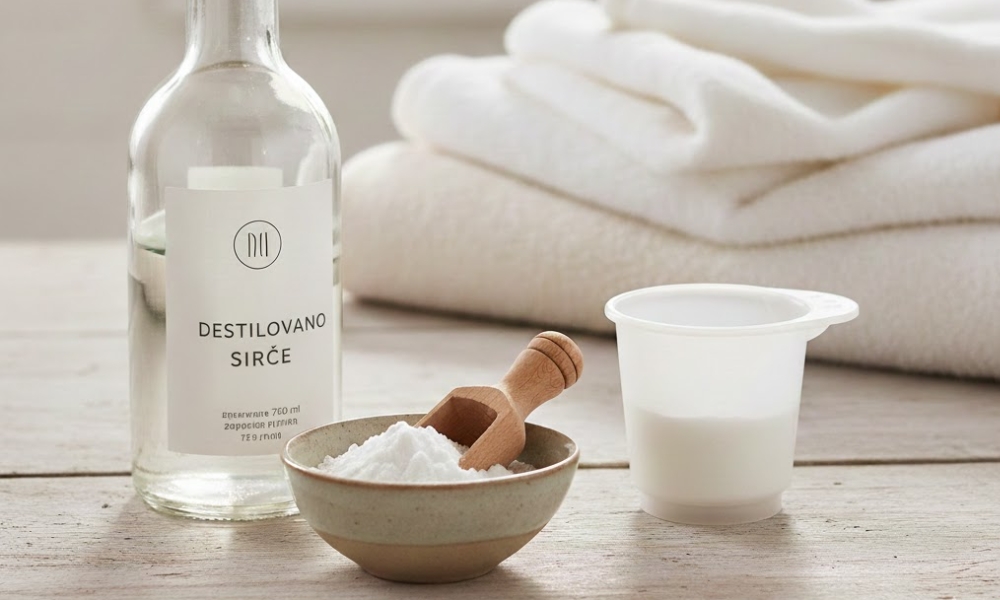
If you have laundry that is already “sealed” with fabric softener and stinks, you can “detox” it:
- Vinegar and Soda: For thorough cleaning and removal of deposits. Add half a cup of white spirit vinegar to the fabric softener compartment during the wash cycle. Vinegar acts as a natural de-gummer and deodorant.
- Deep machine cleaning: Don’t forget that a smelly machine contaminates your laundry. Run an empty cycle with a cup of vinegar on the highest setting once a month.
Smart selection of detergents
The most important change you can make for the health of your skin and the longevity of your clothes is to ditch the classic fabric softener.
Instead of harsh chemicals and fabric softeners, use natural alternatives:
- Ecological detergents: Use minimal amounts.
- Natural fragrances: Use natural flavors and fragrances to make your laundry smell great, but without the suffocating chemical layer.
Conclusion
The health of your skin and the feeling of freshness are directly related to the condition of your laundry. If your clothes don’t “breathe”, it means chemicals, grease and bacteria build up in the fibers that irritate the skin and compromise hygiene.
The solution is not to add more chemicals and fragrances, but to avoid them. Free your clothes from the suffocating film and switch to natural washing and care solutions. Do both your skin and your washing machine a favor – they’ll thank you.