

In the modern world, we are used to seeing plastic as packaging for food, bottles, bags or various objects in the house.
However, what we often forget is that plastic is not only around us, but also on us, in direct contact with the skin.
From clothes and shoes, to underwear, to cosmetics and small accessories that we use every day, plastic is becoming an invisible companion of our every day.
Many materials that seem harmless on the label are actually special forms of plastic, turned into the fibers and threads that carry our t-shirts, leggings, socks and underwear.
| The source of plastic | How it gets on the skin | The problems it causes | Better alternatives |
|---|---|---|---|
| Wardrobe (polyester, polyamide, acrylic, elastin) | Release of microfibers during movement, sweating and washing | Skin irritation, sweating, retention of microplastics on the surface | Cotton, bamboo, linen, wool |
| Underwear (synthetics) | Direct contact with the most sensitive skin | Heat, moisture and friction increase irritation and microplastics | Bamboo laundry, organic cotton |
| Footwear and fashion accessories | Wear of soles and synthetic layers during wear | Small particles remain on socks, floor and skin | Leather footwear, natural materials, better quality soles |
| Cosmetics and packaging | Polymers in formulas + microparticles that are released from the packaging | Microplastics remain on the face, lips and hair | Natural cosmetics without plastic, glass packaging |
| Objects we touch (phone, cards, packaging) | Daily contact with plastic surfaces | Small particles transfer to the skin of the palms and face | Regular cleaning, metal and glass alternatives |
Contents
Synthetic fibers in the wardrobe

Synthetic fibers in clothing create an invisible layer of plastic that we wear on our skin every day
When we talk about plastic in the wardrobe, the first thing we need to understand is synthetic fibers.
Polyester, polyamide, acrylic and elastin belong to materials that come from the oil industry and are essentially types of plastic.
Today, they are found in a huge number of garments, especially in fast fashion, where the goal is to keep the wardrobe cheap, stretchy and visually appealing, but not necessarily healthy for the skin.
While we wear synthetic clothes, tiny fibers, or microplastics, are constantly being released.
Friction from walking, training or sitting, as well as sweat and heat, further affect fiber breakdown.
Although these fibers cannot be seen with the naked eye, they end up on the surface of the skin, in the pores, on the bedding, and then later in the water during washing.
Natural materials, such as cotton, bamboo, linen or wool, are more pleasant to the skin and breathe better, but there are often fewer of them in modern collections.
Even when something says “cotton” on the label, it’s often a blend with polyester, precisely because of the price, wrinkle resistance, and quick drying effect.
In this way, plastic enters our closet imperceptibly.
Underwear and bamboo
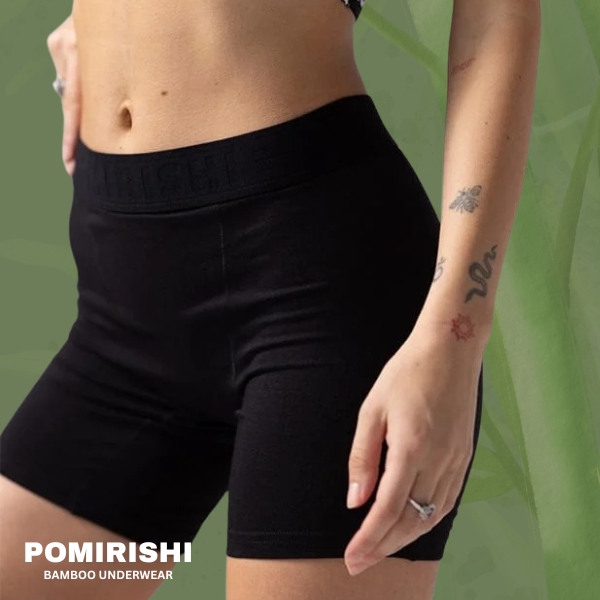
Underwear is a special story, because it is in close and sensitive contact with the skin.
Laundry made of polyester, elastane and similar materials may seem soft and comfortable, but it creates heat and moisture, which favors irritation and the retention of microplastics.
The thinnest and most sensitive parts of the skin come into contact with materials that do not breathe enough, and at the same time release small plastic particles.
That’s why bamboo underwear is becoming an increasingly interesting alternative. Bamboo fibers are obtained from a natural source, they are soft, breathable and pleasant for sensitive skin.
People feel more comfortable in bamboo clothes, because the material regulates moisture better.
Another advantage is that bamboo does not contain microplastics, so it does not contribute to additional pollution of the skin and the environment.
Plastic in footwear and fashion accessories
The plastic in the shoes wears out during wear and releases small particles that mix with dust and remain on the skin
Plastic is also present in footwear. Most modern sneakers, sandals and even dress shoes are made of different types of plastic, such as polyurethane or PVC.
Foam soles, insoles and various synthetic layers create an environment where feet spend all day.
Sweating, friction and heat contribute to material wear and tear, so small pieces of plastic end up on socks, skin and the floor of our homes.
Fashion details are no exception. Bags made of so-called eco-leather, belts, plastic jewelry, buckles, eyeglass frames and hair ornaments are often made of plastic.
Although they seem harmless, they are in constant contact with the skin of the neck, wrists or head.
Through years of use, they wear out and release small particles that we touch with our hands and then unknowingly transfer to our face.
Plastic in cosmetics
The plastic in the shoes wears out during wear and releases small particles that mix with dust and remain on the skin
The study Microplastics in Cosmetics (2025) shows that micro- and nano-particles from cosmetics can pass through the skin barrier and cause oxidative stress
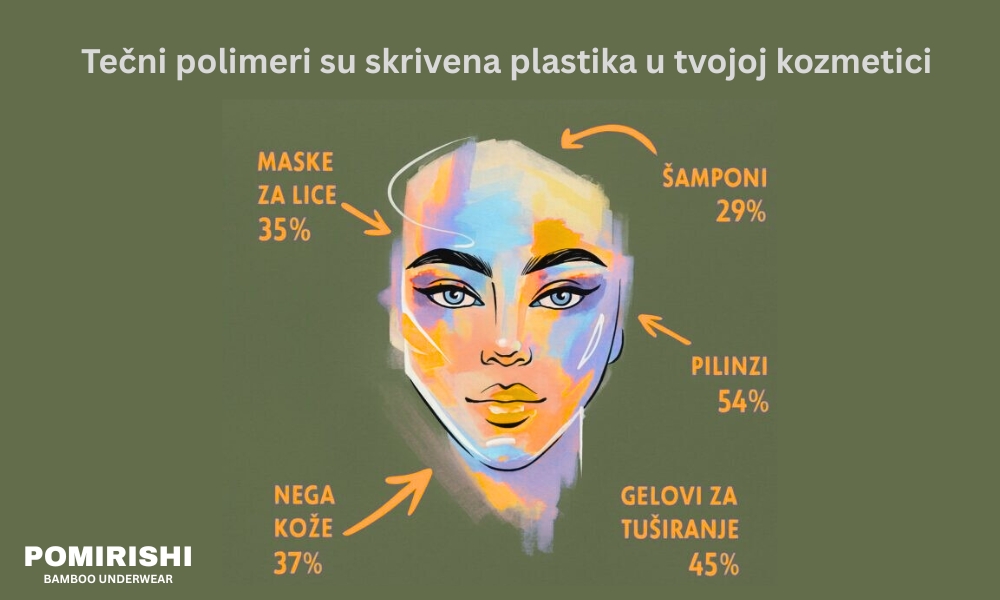
Many products, such as exfoliating gels, toothpaste, make-up, smoothing creams or hair gels, contain various forms of polymers.
These tiny particles give the skin a smooth texture, glow or a feeling of evenness, but at the same time they represent a secret reserve of microplastics that remain on the skin until we wash off the product.
Cosmetic product packaging is also mostly plastic. Every time we open the bottle, press the pump or close the cap, tiny frictions release the microscopic particles.
We touch them with our hands, apply them to our face, lips or hair, so the plastic comes back into close contact with our skin.
One of the biggest problems with microplastics from cosmetics is that they are easily transported into the sewers and rivers and seas during product washing.
The particles are so small that standard water treatment systems cannot fully retain them, which is why they end up in natural waterways where they accumulate and enter the food chain.
According to the 2024 Beyond microbeads study, rinse-off cosmetic products are one of the most significant sources of microplastics in surface water, especially in urban areas where they are used in large quantities every day.
Plastic in the objects we touch
Finally, there are objects that we practically do not let go of our hands. Mobile phone, case, headphones, plastic cards, ballpoint pens and food packaging are always with us.
Every touch leaves a mark, both in the form of fingerprints and in the form of small particles of material that end up on the skin of the palms and face.
Microplastics on the skin
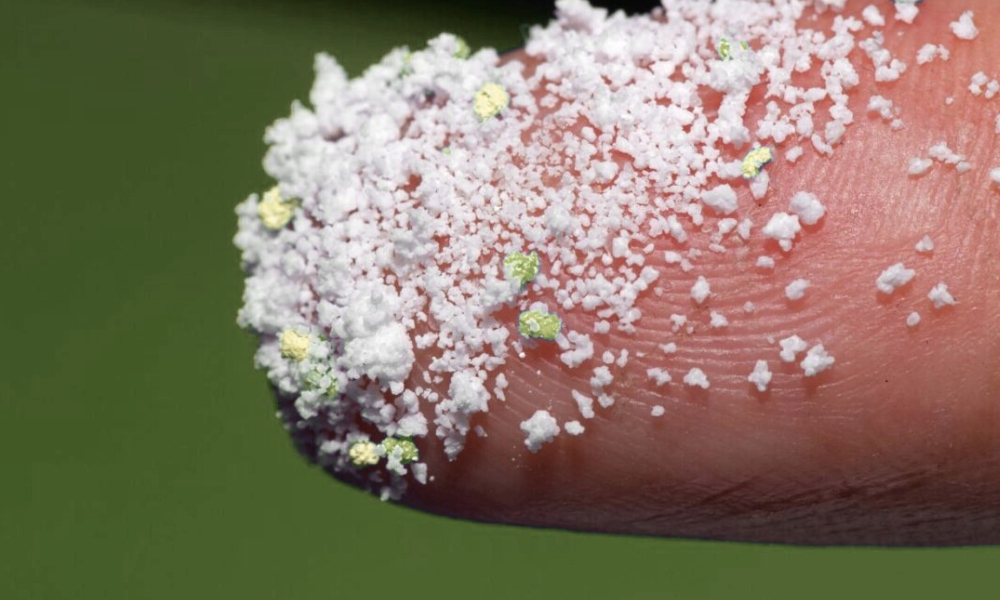
Microplastics are created by the decomposition of artificial materials and easily reach the environment
The logical question is what actually happens with microplastics on the skin. The good news is that the skin is a powerful barrier and keeps most particles on the surface.
However, when the skin is damaged, irritated or frequently exposed to friction, a small part can get deeper, and a bigger problem arises due to prolonged contact with various chemicals and additives related to plastic.
Many people notice redness, itching or a feeling of discomfort in places where synthetic materials dominate, especially in underwear, sportswear and shoes.
Although science is investigating all the health effects of microplastics, it is clear that the combination of heat, humidity, chemicals and plastic is not kind to the skin.
Micro- and nano-plastics have even been found in the human placenta, breast milk and blood, which indicates a high level of plastic distribution in the body.
| Characteristics | Synthetic fibers | Bamboo fibers |
|---|---|---|
| Origin | Derived from the oil industry, chemical processes | Natural source, minimal processing |
| Skin contact | May cause irritation, sweating and discomfort | Gentle, smooth and suitable for sensitive skin |
| Microplastic | Releases microfibres when worn and washed | Does not contain plastic, does not create microplastic |
| Thermoregulation | Breathes less, retains heat | Naturally breathable and fresh material |
| Moisture absorption | Retains moisture and increases sweating | Absorbs moisture and maintains dryness |
| Ecology | Hardly decomposes, pollutes the environment | Biodegradable and environmentally friendly |
The good news is that we can reduce the amount of plastic we carry around every day. The first step is to start reading the declarations.
When we see that the clothes contain a high percentage of polyester or acrylic, we can opt for a model with more cotton, linen or bamboo.
For underwear, choosing bamboo or organic cotton can make a big difference in how you feel throughout the day.
In cosmetics, we can look for formulas without microplastics and avoid ingredients such as polyethylene, acrylates and various artificial polymers.
Sometimes a simpler routine, with fewer products and more natural ingredients, is better for both the skin and the environment.
Practical steps include the use of special laundry bags that retain microfibers, as well as regular cleaning of frequently touched surfaces.
When we have a choice, we can choose glass or metal packaging instead of plastic, especially for products that we carry with us in our bags.
Final word
It is important to understand that plastic is not something that is only found on store shelves and in recycling bins.
Ona je uz našu kožu, u garderobi, donjem vešu, kozmetici i stvarima koje svakodnevno držimo u rukama. Svest o tome ne treba da nas uplaši, već da nas podstakne da postepeno biramo pametnije.
We may not be able to completely avoid plastic in modern life, but we can decide how close we want to let it touch our skin.
Starting with one t-shirt made of natural material, one pair of bamboo underwear or one more natural cream, every small step is a choice in the direction of a better feeling and less plastic in our daily life. Ultimately, the choice is in our hands.